
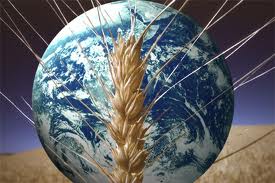
The contemporary world is faced with several emerging issues with food security and effective regulations being a prominent one. The phenomenally rising food prices that had imposed hunger on many people have triggered a painful debate on the availability and distribution of food.
Trading in food cereals and grains, artificial demands, ineffective policies, have all contributed to rise in hunger levels world-over. However the worst is only yet to come. With the world population expected to reach 9 billion by 2050, the food requirement is anticipated at over 70% of current levels.
Sustainably achieving these levels particularly against rising prices of food and fuel, climate changes, and competition for land and water; is a huge challenge. Universal food security is very critical as it is relevant to social welfare, political stability, and economic growth.

Food access and food insecurity may be attributed to several reasons including ineffective distribution either due to political or logistical reasons. History holds evidence of famines and wide-spread hunger caused by problems in food distribution rather than low food production.
Political-agricultural practices like substituting commodity crops instead of food crops, heavy exportation despite an insufficiency within exporting nation, can all contribute to food insecurity. Natural disasters like drought, climate change, soil degradation and pollution also contribute negatively to the global food insecurity.

Given the challenges at hand, it is important to ensure that food production is not only sustainable but also in line with the framework of the healthcare and food safety requirements. Sustainable food production is reflective of producing food in an ecologically-compliant and ethically responsible manner.
This is in contrast to industrial-crop production associated with mono-cropping and extensive use of commercial pesticides and fertilizers, resulting in damage to the environment and people. Sustainable food production contributes to higher yields with time, and is environmentally friendly while also costing less.

Farmers today operate in an increasingly globalized world. In their efforts to contribute more to sustainable food provision, they are faced with several challenges like securing the future of their farms and their livelihood.
As farmers strive to meet these challenges, they also serve as constituents of a large supply chain that includes corporate traders and retailers. Farmers have to adopt different strategies while responding to pressures and demands. Some of these prominent producer strategies include genetic modification, regional food labels and functionality, and organic agriculture. Irrespective of the strategies adopted, all farmers are faced with the consequences of globalization, which include the pressure of higher productivity.

Local food systems contribute to improving food security by increasing the accessibility of fresh and healthy food to populations having limited access of these. These have proved to contribute to the local economy too. Although these local and regional food systems are growing, there exist several barriers to initiating or expanding one, which need to be addressed.
Establishing food hubs at the local and regional levels, help farmers meet their logistical, transportation, and marketing needs.

Increasing food production levels to successfully meet the future requirements of man is a huge global effort. However in a globalized world where sectors like education, industry, economy, social development, political stability, and health are all linked with food availability and consumption, increasing food production levels is hinged to successful participation from these sectors too.
Nations have a primary obligation to feed all its citizens and regulatory frameworks covering all aspects of food production and consumption require to be reviewed at every stage. In trying to meet the challenges of food security and sustainable food production, we must also ensure that regulatory frameworks too keep pace with the developments.

In an increasingly hectic life, an individual always has more things to do each day, striving to raise his economic security and bank balance. One’s worth was reflective of his eduction, social status, assets and financial security. However with the emerging uncertainties, man could someday include food security and food balance too, to reflect his net worth. That day would be definitive proof of the abuse of our sixth sense.


